Gulab Jamun is the undisputed king of Indian desserts. Those soft, spongy, golden-brown milk dumplings soaking in warm, fragrant rose-cardamom sugar syrup — there is no Indian celebration, wedding, festival, or family gathering that's complete without them. "Gulab" means rose (from the rose water in the syrup), "Jamun" refers to the Indian blackberry whose size and colour the dumplings resemble. It's one of the most searched Indian dessert recipes globally, and during Diwali and Eid, the search volume spikes 500%+. The best Gulab Jamun are impossibly soft — they should almost dissolve on your tongue — and the syrup should be fragrant, not cloyingly sweet.
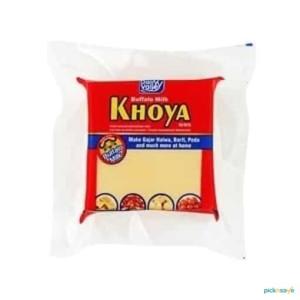
The traditional method uses khoya (evaporated milk solids) — which we stock at Pick N Save as Dairy Valley Khoya 300g — mixed with a tiny amount of flour, shaped into balls, and deep fried at a low temperature. The easier method uses Gits Gulab Jamun Mix, which is essentially pre-made khoya powder that only requires water. At Pick N Save, we stock Gits Gulab Jamun Mix in three sizes (200g, 500g, and 1kg), plus five different ready-made Gulab Jamun options for those who want the taste without any cooking. We've been the Diwali dessert headquarters for Harrow since 1999 — every October, our shelves are stacked floor-to-ceiling with Gulab Jamun mixes, khoya, rose water, saffron, and cardamom. This recipe covers both the mix method and the from-scratch method, so you can choose based on your confidence and time.
In a wide saucepan, combine 2 cups (400g) of sugar (Tate & Lyle Sugar Granulated 1kg) with 2½ cups (625ml) of water. Stir over medium heat until the sugar dissolves completely. Once dissolved, stop stirring — stirring after dissolution can cause crystallisation. Bring the syrup to a gentle boil and simmer for 5 minutes until it thickens very slightly — you want a light, pourable syrup, not a thick one (it thickens further as it cools). The syrup should coat the back of a spoon but run off easily.
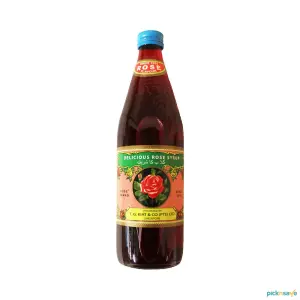
Turn off the heat and add the aromatics: 4 crushed green cardamom pods (TFS Green Cardamom Jumbo 50g), 1 tablespoon of rose water (KTC Rose Water 450ml), and — for a truly luxurious version — a generous pinch of saffron strands (TFS Premium Spanish Saffron Grade 1 — 1g) soaked in 1 tablespoon of warm milk for 5 minutes. The saffron turns the syrup a gorgeous golden colour and adds an ethereal perfume. Keep the syrup warm — the Gulab Jamun must go into warm (not hot, not cold) syrup to absorb properly.
Empty 1 packet of Gits Gulab Jamun Mix (200g) into a bowl. Add warm milk gradually — start with 4–5 tablespoons and add 1 tablespoon at a time, mixing gently with your fingertips. The key word is GENTLY. Overworking the dough activates gluten and produces hard, chewy Gulab Jamun instead of soft, melt-in-mouth ones. Mix just until the dough comes together into a soft, smooth ball with no dry spots and no cracks. If the dough cracks when you roll a ball, it's too dry — add a few drops more milk. If it sticks to your hands, it's too wet — add a tiny pinch of the mix. The dough should feel like soft Play-Doh.
Grease your palms with a tiny amount of ghee (KTC Butter Ghee 500g) or oil. Pinch off small portions of dough and roll between your palms into smooth, crack-free balls — about 2cm in diameter (the size of a large marble). They will roughly double in size when fried. Inspect each ball carefully: any cracks on the surface will cause the Gulab Jamun to break apart during frying. If you see cracks, re-roll with slightly damp palms. You should get 18–20 balls from a 200g mix.
Grate or crumble 250g of khoya (Dairy Valley Khoya 300g) into a bowl. Add 3 tablespoons of plain flour, 1 tablespoon of fine semolina (Fudco Semolina Coarse Yellow 1.5kg — use the finest grind, or pulse briefly in a blender), ¼ teaspoon of baking powder, and a tiny pinch of green cardamom powder (crush seeds from 2 pods). Mix gently with fingertips, adding warm milk 1 tablespoon at a time until the dough comes together — typically 2–4 tablespoons. The same rules apply: don't overwork, no cracks, soft and smooth. Shape into balls as described above.
This is the step that makes or breaks Gulab Jamun, and it's counterintuitive: you fry at LOW heat, not high. Pour enough sunflower oil (KTC Pure Sunflower Oil 5 Litres) or ghee into a deep pan or kadhai — at least 5cm deep. Heat the oil to 140–150°C — this is much lower than normal deep-frying temperature. To test without a thermometer: drop a tiny pinch of dough into the oil. It should sink to the bottom, then slowly rise to the surface over 8–10 seconds. If it rises immediately, the oil is too hot. If it sits on the bottom, the oil is too cool.
Gently slide 5–6 balls into the oil at a time — don't overcrowd. The balls will sink, then slowly rise and begin to turn golden. Gently rotate them with a slotted spoon every 30 seconds for even colouring. Fry for 4–5 minutes total until they're a deep, even, mahogany-golden-brown all over. The slow frying is critical: it cooks the interior completely through without burning the outside. High heat produces Gulab Jamun that are dark brown outside and raw dough inside — the most common failure. Remove with a slotted spoon and drain on kitchen paper for 1 minute.
Gently place the fried Gulab Jamun into the warm (not boiling) sugar syrup. The syrup must be warm — hot syrup will make them disintegrate, cold syrup won't be absorbed. The Gulab Jamun will float initially. Over the next 30 minutes, they absorb the syrup, swell slightly, become heavier, and eventually sink or semi-sink. This soaking time is when the magic happens — the dry, dense fried dumpling transforms into the soft, spongy, syrup-soaked dessert that melts in your mouth. Minimum soaking is 30 minutes, but 2 hours is even better. Overnight soaking in the fridge produces the most evenly saturated results.
Serve Gulab Jamun warm — gently reheat the syrup with the Gulab Jamun in it over low heat for 3–4 minutes. Ladle 3–4 pieces per person into small bowls with plenty of syrup. Garnish with a few slivers of pistachio (Fudco Pistachio Kernels 600g), a strand or two of saffron, and an optional scattering of dried rose petals. The syrup should be fragrant, the Gulab Jamun should be impossibly soft, and the first bite should make your eyes close involuntarily.
Every single ingredient for this recipe is available at picknsave.co.uk with home delivery across London and the UK, or click and collect from our store in Harrow. Here's your shopping list:
*RI = Reference Intake. Values are approximate and may vary based on ingredients. Gulab Jamun is a traditional Indian sweet — it is a high-sugar dessert by nature.